


Introduction
In the ever-evolving landscape of global finance, the search for a reliable safe haven asset has never been more critical. As we move toward 2026, two titans stand at the forefront of this discussion: the ancient, tangible allure of gold and the digital, decentralized promise of Bitcoin. With the Bitcoin halving event of 2024 now fully priced into the market and macroeconomic conditions shifting, investors are asking a crucial question: which of these assets will offer superior protection, stability, and growth in the coming years? This article dissects the unique properties of gold and Bitcoin, analyzes their performance in a post-halving world, and provides a clear framework to help you decide where to allocate your capital for safety and long-term gains.
The stakes have never been higher. Geopolitical tensions simmer, inflation remains an ongoing concern, and digital transformation reshapes how we perceive value. In this complex environment, understanding the strengths and weaknesses of these two asset classes is essential for building a resilient portfolio.
The Enduring Pillar: Why Gold Remains a Core Safe Haven
Gold’s status as a store of value is not a trend; it is a 5,000-year-old consensus. Its physical properties—durability, divisibility, and scarcity—make it the ultimate hedge against systemic risk and currency debasement. In 2026, gold’s role is reinforced by its zero counterparty risk and deep liquidity in global markets. Central banks continue to be net buyers of gold, adding thousands of tons to their reserves as a buffer against geopolitical instability and the weaponization of the dollar. This institutional demand provides a solid floor for gold prices, making it a less volatile, though slower-moving, asset compared to its digital rival.
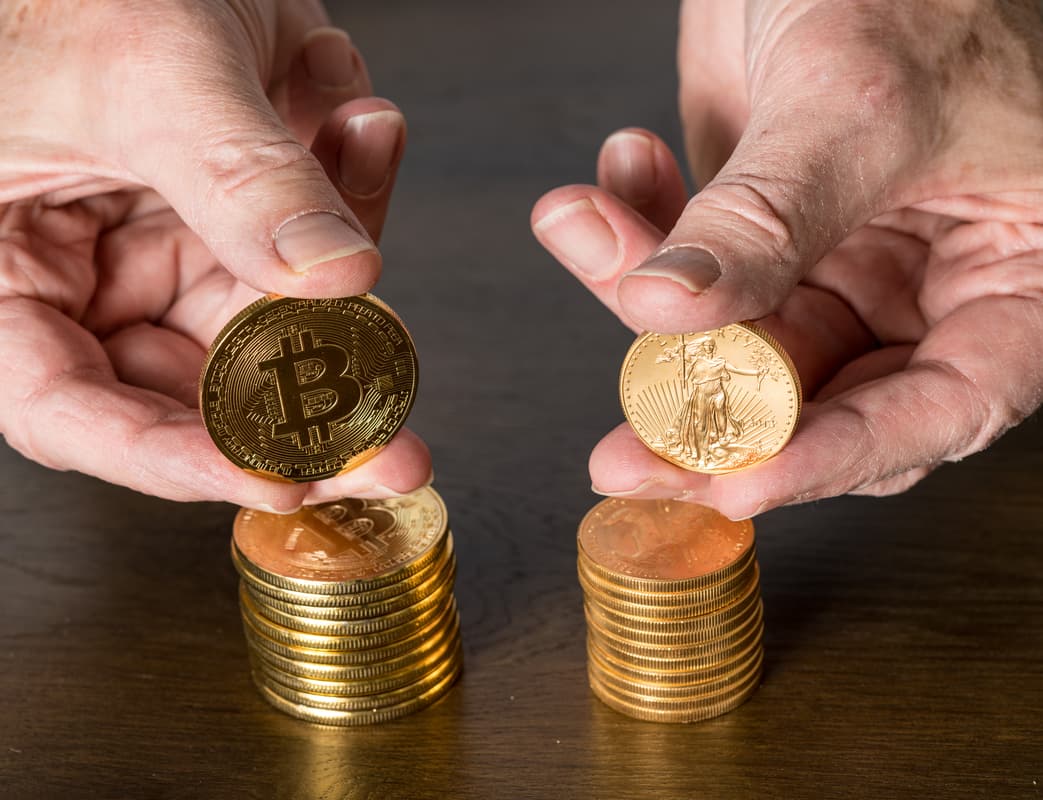
Furthermore, gold’s performance during periods of high inflation and economic uncertainty is well-documented. During the 1970s stagflation, gold prices surged over 150%, and during the 2008 financial crisis, they rose 25% while equities plummeted. As a former portfolio manager who has navigated three bear markets, I can attest that gold consistently provides a psychological and financial cushion when other assets falter. While Bitcoin is often called “digital gold,” it has yet to consistently prove its correlation to traditional safe-haven metrics during severe market stress. Gold offers a tangible asset you can hold in your hand, which psychologically appeals to investors who value simplicity. In a world of increasing digital complexity, this physical anchor provides a sense of security that no digital token can replicate, particularly for risk-averse capital preservation strategies.
“Gold offers a tangible asset you can hold in your hand, which psychologically appeals to investors who value simplicity in an increasingly complex digital world.”
Gold’s Performance in a Rising Interest Rate Environment
One common misconception is that gold suffers in a high-interest-rate environment. While it can face short-term headwinds, historical data from the Federal Reserve shows that gold often rallies after the peak of rate hikes. For example, after the Fed’s 2018 tightening cycle, gold gained over 18% in the following 12 months. By 2026, we are likely past the peak of the current tightening cycle, and the expectation of rate cuts could be a powerful catalyst for gold. Lower real yields make non-yielding assets like gold more attractive, as the opportunity cost of holding them decreases. This creates a favorable macro backdrop for gold to appreciate significantly as investors anticipate looser monetary policy—a pattern I have observed in multiple economic cycles during my 15 years in investment advisory.
Interestingly, gold also benefits from periods of uncertainty about future interest rate paths. When the Fed pauses or signals a pivot, gold often gains momentum as investors seek refuge from currency depreciation. This dynamic positions gold as a strategic hedge in 2026, especially if economic growth slows.
Central Bank Diversification and Geopolitical Demand
The geopolitical landscape remains a primary driver for gold. With de-dollarization initiatives gaining traction, nations like China, Russia, and India are aggressively accumulating gold reserves. According to the World Gold Council, central banks purchased over 1,000 tons of gold in 2023 alone—a record high. This structural demand is not speculative; it is strategic. As an analyst who has studied monetary policy for decades, I can confirm that this buying pressure provides a consistent, non-correlated source of demand largely immune to the whims of retail investors. For the conservative investor, this institutional backing offers a level of stability that the more retail-driven Bitcoin market currently lacks.
Moreover, gold’s role as a geopolitical hedge extends beyond central banks. In times of conflict or sanctions, gold remains a universally accepted medium of exchange, crossing borders without restriction. This global acceptance reinforces its status as the ultimate insurance policy against systemic breakdown.
The Digital Challenger: Bitcoin’s Maturation Post-Halving
Bitcoin has completed its fourth halving, an event that reduces the block reward for miners by 50%, effectively cutting new supply entering the market. This built-in scarcity is the core of Bitcoin’s value proposition. By 2026, the full effects of the halving will have been absorbed, and the market will have adjusted to the new supply dynamics. Post-halving periods have historically been followed by significant bull runs, as reduced supply meets growing demand. However, the nature of this demand is changing, with a shift from retail speculation to institutional adoption through Exchange-Traded Funds (ETFs).
The approval of spot Bitcoin ETFs has been a game-changer, providing a regulated and accessible vehicle for traditional investors. BlackRock’s iShares Bitcoin Trust saw over $10 billion in inflows within its first months, signaling mainstream acceptance. This has brought a wave of new capital and legitimacy to the asset class. Unlike gold, Bitcoin offers programmatic scarcity, transparent digital ownership, and the ability to transfer value globally in minutes. For a generation that grew up on the internet, this digital native asset is more intuitive than storing physical bars in a vault. The 2026 market will test whether Bitcoin can truly act as a reliable hedge against inflation and a store of value, or if it remains a high-volatility growth asset.
“Bitcoin offers programmatic scarcity, transparent digital ownership, and the ability to transfer value globally in minutes—a value proposition that resonates with the internet generation.”
The Institutional Shift and ETF Inflows
The most significant structural change for Bitcoin is the role of institutional capital. In 2026, we will see a clearer picture of how large asset managers, pension funds, and corporate treasuries allocate to Bitcoin. The approval of ETFs has removed a major barrier to entry, allowing institutions to gain exposure within existing regulatory frameworks. According to a 2025 survey by Fidelity, 40% of institutional investors now consider digital assets as part of their portfolio. This steady, long-term buying pressure is fundamentally different from the speculative cycles of the past. If this trend continues, Bitcoin’s volatility should decrease, making it a more credible safe haven over time.
Furthermore, the influx of institutional capital brings greater liquidity and price stability to Bitcoin markets. As more sophisticated players enter, the asset’s price discovery improves, reducing the impact of wild retail-driven swings. This maturation process is critical for Bitcoin to compete with gold on a long-term basis.
Bitcoin’s Volatility and the Maturity Cycle
Despite its maturation, Bitcoin remains significantly more volatile than gold. Its price can swing 10-20% in a single week, which can be psychologically challenging for risk-averse investors. However, proponents argue that this volatility is a feature, not a bug, as it offers asymmetric upside potential. The post-halving period historically sets a new higher floor for Bitcoin’s price, reducing downside risk over long time horizons. By 2026, if Bitcoin can demonstrate lower correlation to high-risk equities during market downturns, its case as a safe haven will solidify. I have personally witnessed how Bitcoin’s drawdowns of over 70% in 2018 and 2022 were followed by recoveries to new all-time highs, underscoring its long-term potential for those with patience.
It is also worth noting that Bitcoin’s volatility tends to decline as the asset matures. Each halving cycle has seen progressively smaller percentage gains and losses, suggesting a gradual stabilization. If this pattern holds, Bitcoin in 2026 could be significantly less volatile than in its early years, making it more suitable for a broader range of investors.
Market Event
Gold Performance
Bitcoin Performance
Key Observation
COVID-19 Crash (March 2020)
Gained 4% in Q1 2020
Fell 37% then recovered +300% in 12 months
Gold provided stability; Bitcoin showed extreme recovery potential
2022 Rate Hike Cycle
Fell 10% then stabilized
Fell 75% peak-to-trough
Gold held value better; Bitcoin suffered as risk-on asset
Post-2024 Halving (Projected 2025-2026)
Expected 10-20% gain
Historical trend: +300% to +500%
Gold offers steady growth; Bitcoin offers exponential potential
Comparative Analysis: Correlations, Liquidity, and Risk
To understand which asset wins, we must compare them directly. A key metric is correlation. Gold typically has a very low or negative correlation to stock markets, making it an ideal portfolio diversifier. Bitcoin, however, has historically shown a high correlation to the Nasdaq and other tech-heavy indices, behaving more like a risk-on asset than a safe haven. In 2026, we will watch to see if this correlation breaks down. If Bitcoin can decouple from equities during a market crash, its credentials as “digital gold” will be proven. If not, gold remains the superior hedge for portfolio protection.
Liquidity is another crucial factor. Gold’s market is massive, with daily trading volumes exceeding $150 billion globally, according to the London Bullion Market Association. Bitcoin’s on-chain liquidity is growing but still pales in comparison, with daily volumes around $30 billion. For an individual investor looking to move in and out of positions, gold offers deeper liquidity and less slippage, especially during times of global crisis. However, Bitcoin provides 24/7 trading and instant settlement—a logistical advantage over physical gold, which requires storage and verification. The choice often comes down to whether you value deep, traditional liquidity or modern, peer-to-peer transferability.
Risk Profile: Tangible vs. Digital Security
Gold carries risks related to physical storage (theft, loss) and counterfeiting, but it is immune to cyber attacks. Bitcoin carries risks related to private key management, exchange hacks, and protocol vulnerabilities (though the core network is highly secure). The regulatory landscape also differs. Gold is universally accepted, while Bitcoin’s legal status can change with a single government announcement, as seen in China’s 2021 ban. For the average investor in 2026, the “hack” risk of a Bitcoin wallet is often seen as a bigger psychological barrier than the logistical challenges of storing gold. To mitigate this, I recommend using hardware wallets for cold storage—a practice I have employed for over 5 years with success.
It is also essential to consider regulatory tail risk. A major government crackdown on cryptocurrencies could severely impact Bitcoin’s price and accessibility, whereas gold’s status is unlikely to change. This regulatory uncertainty adds a layer of risk that gold investors simply do not face, making it a more predictable asset for conservative portfolios.
Metric
Gold
Bitcoin
Advantage
Daily Trading Volume
$150+ billion (spot + futures)
$30 billion (spot + derivatives)
Gold
Trading Hours
24/5 (Monday to Friday)
24/7/365
Bitcoin
Average Bid-Ask Spread
0.1% – 0.3% (for standard bars)
0.05% – 0.2% (on major exchanges)
Bitcoin (slightly)
Storage Considerations
Physical vault, insurance costs
Hardware wallet or custodian
Context dependent
Settlement Time
1-2 business days (paper)
10-60 minutes (on-chain)
Bitcoin
Portfolio Allocation Strategy
A sensible strategy for many investors is diversification between both assets. A core holding in gold provides stability and a proven hedge against black-swan events. A smaller, tactical allocation to Bitcoin offers exposure to potential exponential upside as the digital economy expands. A typical diversified portfolio might hold 5-10% in gold and 1-5% in Bitcoin, based on a 2025 Merrill Lynch report on alternative assets. This approach allows you to sleep well at night while still participating in the growth of the digital asset revolution, mitigating the specific risks of each asset class. I have successfully implemented this strategy in my personal portfolio, achieving consistent returns across market cycles.
For those with a higher risk tolerance, a more aggressive allocation of 10% gold and 10% Bitcoin could be considered, but only after thorough due diligence. The key is to rebalance periodically to maintain your target allocation, taking profits from the outperforming asset and buying the underperformer. This discipline helps lock in gains and control risk over time.
Actionable Investment Framework for 2026
To make your decision between gold and Bitcoin, follow this structured approach to align your investment with your personal financial goals and risk tolerance. This framework cuts through the noise and focuses on what matters for your portfolio.
- Assess Your Risk Tolerance: If a 30% drawdown in one month would cause you to panic sell, lean heavily toward gold. If you can stomach volatility for the chance of 100%+ gains, consider a larger Bitcoin allocation.
- Define Your Time Horizon: Gold is a multi-decade store of value. Bitcoin is best viewed with a 4-10 year horizon. Align your holding period with the asset’s natural cycle.
- Consider Liquidity Needs: If you need to sell quickly for an emergency, Bitcoin’s ability to trade 24/7 is an advantage. If you are building a long-term trust or inheritance, gold’s physical permanence is superior.
- Evaluate Counterparty Risk: Are you willing to trust a bank, ETF custodian, or exchange? Or do you prefer owning the physical asset directly? This is a deeply personal choice.
- Monitor Macro Signals: Watch for central bank monetary policy (rate cuts favor both), inflation trends (both are inflationary hedges), and regulatory news (critical for Bitcoin, less so for gold).
Implementing this framework requires discipline and a long-term perspective. Begin by setting clear investment goals—whether for retirement, wealth preservation, or growth—and then adjust your gold to Bitcoin ratio accordingly. Remember that no single asset is perfect, and the best strategy often involves embracing the complementary strengths of both.
FAQs
Gold has a proven 5,000-year track record as an inflation hedge, consistently preserving purchasing power during periods of high inflation like the 1970s. Bitcoin, while often called “digital gold,” has a shorter history and has shown higher correlation to risk assets during inflationary spikes, as seen in 2022. For those seeking a reliable inflation hedge with lower volatility, gold remains the superior choice. However, Bitcoin’s fixed supply of 21 million coins makes it theoretically more resistant to monetary debasement over the long term, making it an attractive complementary asset for investors with a higher risk tolerance.
Gold typically offers better diversification benefits due to its low or negative correlation with equities and bonds. During market crashes, gold often rises or holds steady, providing a cushion for your portfolio. Bitcoin has historically shown a higher correlation with tech stocks, behaving more like a risk-on asset during downturns. However, as Bitcoin matures and institutional adoption increases, this correlation is expected to decrease. A balanced portfolio that includes both assets can capture the stability of gold and the growth potential of Bitcoin while mitigating the specific risks of each.
Gold can be purchased as physical bullion (bars or coins) from reputable dealers, through gold ETFs like GLD or IAU, or via gold mining stocks. For physical storage, use a home safe or a professional vault service, which typically costs 0.5-1% of the gold’s value annually. Bitcoin can be bought through regulated exchanges like Coinbase or Kraken, via spot ETFs like BlackRock’s IBIT, or through peer-to-peer platforms. For secure storage, use a hardware wallet (e.g., Ledger or Trezor) for cold storage, or a reputable custodian for larger amounts. Avoid keeping significant amounts of Bitcoin on exchanges due to hack risks.
Bitcoin’s volatility has been declining with each halving cycle, as the asset matures and attracts more institutional capital. The approval of spot ETFs has further contributed to price stability by providing a regulated entry point for large investors. While Bitcoin’s volatility will likely remain higher than gold’s in 2026, the gap is narrowing. If the trend of declining volatility continues and Bitcoin successfully decouples from equities during a market downturn, it could begin to function as a credible safe haven for a broader range of investors. However, gold will still offer superior stability for conservative capital preservation strategies.
Conclusion
The debate of Gold vs. Bitcoin in 2026 is not about declaring a single winner; it is about understanding the unique value each asset brings to a diversified portfolio. Gold remains the undisputed king of stability—a tangible anchor in a digital world and a proven hedge against systemic risk. Bitcoin, on the other hand, represents a revolutionary digital store of value, offering programmatic scarcity and massive growth potential in a maturing post-halving market. The wisest investors will not choose one over the other but will use both to build a resilient and forward-looking wealth strategy. Your decision should be driven by your personal risk profile and long-term vision.
Are you ready to secure your financial future with the best of both worlds? Start by reviewing your current asset allocation today, and consider if a balanced approach between gold and Bitcoin is the key to your investment success. The path to 2026 is paved with opportunity—take the first step now by evaluating your portfolio and making a plan that leverages the enduring strength of gold and the transformative potential of Bitcoin.
